This will mark my third Christmas as a Flotsam Diarist.
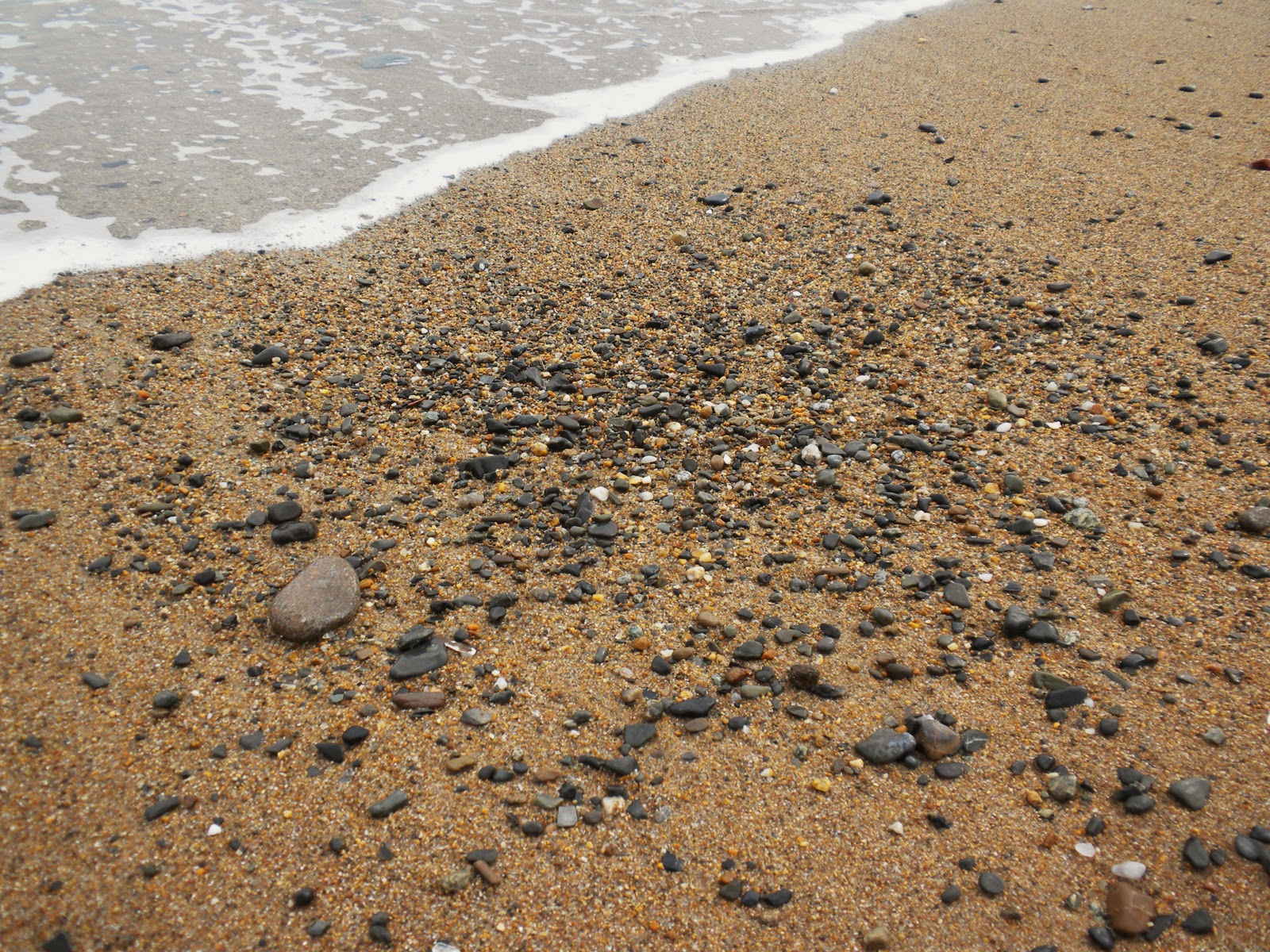
My third Christmas seeing the world through a different set of eyes. Eyes that seek out -- and thrill to find -- the unexpected connections in our world. Between nature's beauty & bounty and the threads we weave as we build our lives. Eyes that spy a glimmering grain of sand in my daughter's shovel on the beach and imagine it once high and proud on a now-lost mountainside. Eyes that see springtime rivers running strong with snowmelt, emptying into churning seas, nutrients mixing and spawning incredible plankton blooms. Blooms that feed an ocean and give us every second breath of life we take.
Eyes that grimace & wince at needless waste, thoughtless pollution, the harm we sow which our children and grandchildren will reap. Eyes that study the staggering costs of things we've been taught to call "cheap." That see, week after week, a gorgeous deserted cove ruined with newly-laid cast-offs of modern life.
I think of the incredible gift of being aware of the beauty around us, of a past that stretches back impossibly far, or a distant future that we are building today -- this very minute -- at the same time that it's molding and building us. The gift of knowing that there are forces far beyond us, and also that the smallest person can be the snowflake that starts the avalanche.
We may be the only species on Earth with the ability to ruin Earth. But we're also the only species that can appreciate it. To well up with emotion at a pink & golden sunrise; or feel the pull of the sea as we walk an undiscovered and unmarred stretch of shore; or smell the salt air and think on our distant ancestors and our distant descendants doing the same. To burst with the need to create art & song & beauty that had never before existed, in much the same way as we had never before existed.
To become bigger than the moment, bigger than we are.
To me, Christmas is a message of hope. A message that love and light are true things; that ugliness and shadow are mockeries that can't touch or harm those eternal truths. It's a message that the holiest and the highest could rest within a human heart. And that if we look inside, and then look outside again with new eyes, we might see glimpses of what we're all searching for. Guideposts.
The Flotsam Diaries isn't what I do; it's who I am. And I wouldn't have it any other way.
To you and yours, a very Merry Christmas, and Happy Holidays!
XO
Showing posts with label flotsam. Show all posts
Monday, December 24, 2012
Christmas Wishes
Labels:
beautiful,
comfort,
earth,
flotsam,
happy holidays,
joy,
Merry Christmas,
ocean,
peace,
what you do,
why
Thursday, November 1, 2012
Aftermath
Superstorm Sandy.
I've been struggling to create a coherent set of thoughts about this monster. The wreckage and sadness on my computer screen speak so loudly to the heart of The Flotsam Diaries. Of overbuilt coastlines, rising tides, plastic lives. Polluted lives.
Yet writing about what Sandy has wrought from the lens of the Diaries has seemed gauche.
Maine was spared her worst. Our condo was spared entirely. We even got the recycling bins stored away safely so not one bottle blew out and besmirched our lawn. Our family is all OK. Even those family members in the direct path of the storm -- inland southern New Jersey -- suffered no worse than power outages or nearby tree limbs down.
Meanwhile New Jersey's coast bore so much. So much loss. Not to mention New York City herself, Long Island, Connecticut. Beyond. And of course before all that, death and destruction in the Caribbean too.
I work on human-scale events. Ripped beach balls, a broken umbrella base, flowerpot scraps. A menu blown from a beachside restaurant. Occasionally household rubbish that blows out of a trash bin and goes down a storm drain.
I have collected & cataloged more than 25,000 pieces of manmade debris. Some of it thoughtlessly left behind, some accidentally lost. Surely, some of it the poignant remains of some greater disaster.
25,000 pieces. When Sandy struck, each single solitary wave that hammered each town pulled that much debris into the ocean. Up and down a coastline stretching hundreds of miles. For hours and hours.
The scale of what one storm has done to people's lives is shocking. The scale of what it did to the ocean is shattering.
But on Tuesday morning, I went to my part of the ocean. I had to see it. It was almost a compulsion. I thought I was going in order to look for erosion and debris. It turns out, I was going in order to see this:
That hole in the heavens opened up as I was wrapping up my check-in. It lasted in its glory for about 30 seconds.
On the way to the cove, I had stopped at a convenience store for some coffee. I even chatted with the owner for about 5 minutes. I have never had the urge to pull over and get coffee on any trip to the beach. If I hadn't this time, I would have been gone from the cove before seeing -- and capturing -- this.
It brought to mind a line from my hero Tolkien:
"In the end, the Shadow was only a small and passing thing: there was light and high beauty for ever beyond its reach."
Tomorrow I'll be back at the cove, picking up debris like I always do. While folks 400 miles away do the same thing. On a different scale.
To them, my heart goes out and my hat is off.
I've been struggling to create a coherent set of thoughts about this monster. The wreckage and sadness on my computer screen speak so loudly to the heart of The Flotsam Diaries. Of overbuilt coastlines, rising tides, plastic lives. Polluted lives.
Yet writing about what Sandy has wrought from the lens of the Diaries has seemed gauche.
Maine was spared her worst. Our condo was spared entirely. We even got the recycling bins stored away safely so not one bottle blew out and besmirched our lawn. Our family is all OK. Even those family members in the direct path of the storm -- inland southern New Jersey -- suffered no worse than power outages or nearby tree limbs down.
Meanwhile New Jersey's coast bore so much. So much loss. Not to mention New York City herself, Long Island, Connecticut. Beyond. And of course before all that, death and destruction in the Caribbean too.
I work on human-scale events. Ripped beach balls, a broken umbrella base, flowerpot scraps. A menu blown from a beachside restaurant. Occasionally household rubbish that blows out of a trash bin and goes down a storm drain.
I have collected & cataloged more than 25,000 pieces of manmade debris. Some of it thoughtlessly left behind, some accidentally lost. Surely, some of it the poignant remains of some greater disaster.
25,000 pieces. When Sandy struck, each single solitary wave that hammered each town pulled that much debris into the ocean. Up and down a coastline stretching hundreds of miles. For hours and hours.
The scale of what one storm has done to people's lives is shocking. The scale of what it did to the ocean is shattering.
But on Tuesday morning, I went to my part of the ocean. I had to see it. It was almost a compulsion. I thought I was going in order to look for erosion and debris. It turns out, I was going in order to see this:
That hole in the heavens opened up as I was wrapping up my check-in. It lasted in its glory for about 30 seconds.
On the way to the cove, I had stopped at a convenience store for some coffee. I even chatted with the owner for about 5 minutes. I have never had the urge to pull over and get coffee on any trip to the beach. If I hadn't this time, I would have been gone from the cove before seeing -- and capturing -- this.
It brought to mind a line from my hero Tolkien:
"In the end, the Shadow was only a small and passing thing: there was light and high beauty for ever beyond its reach."
Tomorrow I'll be back at the cove, picking up debris like I always do. While folks 400 miles away do the same thing. On a different scale.
To them, my heart goes out and my hat is off.
Thursday, May 24, 2012
Introducing Curtis Cove
I've mentioned in passing that my work lately has expanded beyond one beach. Time to dish on what I've been up to these past several months.
Welcome to Curtis Cove, Biddeford, Maine:
I discovered this place in December 2010. It's at the end of a long, winding, wonderful seashore drive that wends past salt marshes and beautiful homes. The road grows more & more narrow and rustic -- and isolated. Then, rounding a sharp corner bordered by a rip-rap seawall and thick brambles, it ends abruptly at a private dirt access road (the arrow below).
When I got to the end, I hopped out for a look. The cove was private, so I didn't stay long. It should have been a little slice of heaven. An untouched secret shore with rocky headlands at its front, a salt marsh & tidal estuary at its rear. But what I saw shocked me. The entire beach was littered in garbage. Rope, old cups, a balloon, innumerable lobster trap parts, unidentifiable but long-suffering plastic scraps, a tire.
This private, untouristed, unknown cove was a dump -- a huge collection spot for ocean-borne garbage. I took some pictures, and left heavy-hearted.
Fast-forward to Fall 2011, when I came across amazing news. The family that owned the whole 97-acre peninsula was selling. To a group of conservation organizations. One of the last undeveloped coastal gems in southern Maine was going to be preserved forever! And I just might have a chance to get back onto Curtis Cove to have a real look.
In the end, the peninsula, "Timber Point," came into the hands of the Rachel Carson National Wildlife Refuge. I met with the refuge management, discussed my flotsam work with them, and suggested that Curtis Cove would be an ideal spot to see -- really see -- what's out there in the Gulf of Maine. And happily they agreed! Within weeks my permits had been signed & granted.
I was in!
On January 1, 2012, I visited Curtis Cove for the first time as a licensed Flotsam Diarist. I scouted the land and decided on a plan of attack for studying the beach. With the heavy influx of flotsam, I decided to focus on a 150-foot wedge of shoreline along the northern part of the cove. And I got to work. Thanks to a ridiculously mild winter, I was able to spend January and half of February cleaning off the age-old debris, finally getting to a clean "baseline" on February 22.
Since then, I've been returning weekly to scour the same 150-foot stretch of beach and see what's come in.
The results have been gobsmacking.
This is 1325 feet of fishing rope. More than 1/4 mile of rope, 757 individual pieces, washed in between February 29 and May 17. And it shows no signs of stopping, or slowing.
But far beyond just rope is the assortment of other debris, almost all plastic. A few examples. February 29:
Or March 7:
Or March 13:
Or the huge shocker, March 30:
On March 30 alone I collected 526 pieces of garbage -- 398 of them were little scraps of vinyl coating torn from derelict & rusting lobster traps. At least half a million derelict traps now rest on the floor of the Gulf of Maine. Each trap will release over a thousand of these vinyl scraps by the time it's done disintegrating. They don't go away.
Curtis Cove has always been a natural collection point of ocean debris. Seaweed still washes in two feet thick if the weather's right. As it decays (the nose won't miss this), it pours an amazing amount of nutrients back into the soil and the water. This rich environment supports wonderful tide pools, choc-a-bloc with life and diversity.
When the gulls bobbing on the incoming tide cry... or the geese soar by overhead straight as an arrow... or the surf roars as it breaks on the distant ledge at the head of the cove... or you discover a new creature you've never seen before... that's when you realize that this is a special place.
And when you see a gorgeous tide pool littered with modern junk:
...that's when you realize that the special places in the world are under assault. From our plastic lifestyle. And that this has to change. Curtis Cove is now a wildlife refuge. A place protected from the modern world. But there is no protection from what the modern world has dumped into the sea.
It's not really possible to overstate how badly the Gulf of Maine is being abused by persistent plastic garbage. But now that I have Curtis Cove to visit week after week, it is possible to shine a bright & searing light on it.
Welcome to Curtis Cove, Biddeford, Maine:
I discovered this place in December 2010. It's at the end of a long, winding, wonderful seashore drive that wends past salt marshes and beautiful homes. The road grows more & more narrow and rustic -- and isolated. Then, rounding a sharp corner bordered by a rip-rap seawall and thick brambles, it ends abruptly at a private dirt access road (the arrow below).
When I got to the end, I hopped out for a look. The cove was private, so I didn't stay long. It should have been a little slice of heaven. An untouched secret shore with rocky headlands at its front, a salt marsh & tidal estuary at its rear. But what I saw shocked me. The entire beach was littered in garbage. Rope, old cups, a balloon, innumerable lobster trap parts, unidentifiable but long-suffering plastic scraps, a tire.
This private, untouristed, unknown cove was a dump -- a huge collection spot for ocean-borne garbage. I took some pictures, and left heavy-hearted.
Fast-forward to Fall 2011, when I came across amazing news. The family that owned the whole 97-acre peninsula was selling. To a group of conservation organizations. One of the last undeveloped coastal gems in southern Maine was going to be preserved forever! And I just might have a chance to get back onto Curtis Cove to have a real look.
In the end, the peninsula, "Timber Point," came into the hands of the Rachel Carson National Wildlife Refuge. I met with the refuge management, discussed my flotsam work with them, and suggested that Curtis Cove would be an ideal spot to see -- really see -- what's out there in the Gulf of Maine. And happily they agreed! Within weeks my permits had been signed & granted.
I was in!
On January 1, 2012, I visited Curtis Cove for the first time as a licensed Flotsam Diarist. I scouted the land and decided on a plan of attack for studying the beach. With the heavy influx of flotsam, I decided to focus on a 150-foot wedge of shoreline along the northern part of the cove. And I got to work. Thanks to a ridiculously mild winter, I was able to spend January and half of February cleaning off the age-old debris, finally getting to a clean "baseline" on February 22.
Since then, I've been returning weekly to scour the same 150-foot stretch of beach and see what's come in.
The results have been gobsmacking.
This is 1325 feet of fishing rope. More than 1/4 mile of rope, 757 individual pieces, washed in between February 29 and May 17. And it shows no signs of stopping, or slowing.
But far beyond just rope is the assortment of other debris, almost all plastic. A few examples. February 29:
Or March 7:
Or March 13:
Or the huge shocker, March 30:
On March 30 alone I collected 526 pieces of garbage -- 398 of them were little scraps of vinyl coating torn from derelict & rusting lobster traps. At least half a million derelict traps now rest on the floor of the Gulf of Maine. Each trap will release over a thousand of these vinyl scraps by the time it's done disintegrating. They don't go away.
Curtis Cove has always been a natural collection point of ocean debris. Seaweed still washes in two feet thick if the weather's right. As it decays (the nose won't miss this), it pours an amazing amount of nutrients back into the soil and the water. This rich environment supports wonderful tide pools, choc-a-bloc with life and diversity.
| A nudibranch -- a shell-less snail |
| A gunnel, or "rock eel" |
And when you see a gorgeous tide pool littered with modern junk:
...that's when you realize that the special places in the world are under assault. From our plastic lifestyle. And that this has to change. Curtis Cove is now a wildlife refuge. A place protected from the modern world. But there is no protection from what the modern world has dumped into the sea.
It's not really possible to overstate how badly the Gulf of Maine is being abused by persistent plastic garbage. But now that I have Curtis Cove to visit week after week, it is possible to shine a bright & searing light on it.
Wednesday, December 28, 2011
Collection Report Dec 12, 2011
Monday, December 12. 1:42 PM, chilly & bright with a dazzling low sun, and a light breeze from the SW. A little more than an hour after high-tide -- if it could actually be called "high tide." The tideline was barely above the terrace, a sign of a remarkably feeble & low-energy week.
The weak waves preserved a slightly trampled message from the night before.
A nice display of youthful enthusiasm, the perfect tonic to my first beach collection as a middle-aged 40-year-old! I wish good things to Ryan & her Harry.
As expected, cold skies & subdued tides brought in only the slightest flotsam. So why did one of the few pieces have to be another one of these?
Down to the numbers. Zone N:
28 finds:
On to Zone S:
6 finds:
I'm writing this on December 28, a couple weeks after the fact. Last night a major gale blew through southern Maine, knocking over a few smaller trees and toppling recycling bins & trash cans. I wonder what the beach looks like right now?
The weak waves preserved a slightly trampled message from the night before.
| Ryan + Harry. Awwww... |
As expected, cold skies & subdued tides brought in only the slightest flotsam. So why did one of the few pieces have to be another one of these?
| Enough already! |
28 finds:
- Building materials: 6 (3 asphalt, brick, tile, fence slat)
- Foam/Styrofoam: 5
- Fishing misc.: 3 (rope)
- Food-related plastics: 3 (1 bottlecap o-ring, 2 food wrapper scraps)
- Food-related metal/glass: 2 (can scrap, sea glass)
- Nonfood/unknown plastics: 2 (tampon applicator, 1 scrap >1")
- Cigarette filters/plastics: 7
- Paper/wood: 0
- Misc./unique: 0
On to Zone S:
6 finds:
- Building materials: 1 (asphalt)
- Foam/Styrofoam: 0
- Fishing misc.: 3 (2 scraps of lobster trap vinyl coating, claw band)
- Food-related plastics: 0
- Food-related metal/glass: 1 (sea glass)
- Nonfood/unknown plastics: 0
- Cigarette filters/plastics: 1
- Paper/wood: 0
- Misc./unique: 0
I'm writing this on December 28, a couple weeks after the fact. Last night a major gale blew through southern Maine, knocking over a few smaller trees and toppling recycling bins & trash cans. I wonder what the beach looks like right now?
Labels:
beaches,
flotsam,
Maine,
plastic pollution,
Saco,
Saco Bay,
tampon applicators,
tourism,
weak tides,
winter sun
Tuesday, December 27, 2011
Collection Report Dec 5, 2011
With Christmas & Hannukah festivities now fading into the past, it's time to play catch-up with these collection reports. So, Monday, December 5. 12:15, low tide, light breeze, & a glimmering terrace as the sun peeked through partly cloudy skies.
A fairly low-energy week judging by the lack of wrack. But, this was the week where the personal became the very public.
I'd be just as glad to go another year & a half until the next hypodermic. This one clearly came from the sea -- it was faded, cracked, abraded. One wonders what its story was -- a hospital, home health care, back alley? One shouldn't need safety gloves to dig in the sand.
Anyway, on to Zone N:
74 finds:
The personal care products are troubling. Not least of which because at least the needle & applicator could have come from anywhere from Halifax, Nova Scotia down to Boston. Or even farther south. How do you stop it if you can't tell where it started? It's everybody's problem... which I guess means anybody, anywhere could start being the solution, right?
Zone S:
24 finds:
A fairly low-energy week judging by the lack of wrack. But, this was the week where the personal became the very public.
| Happy news? Or sad? |
| Don't. Flush. Plastics. |
| My first hypodermic; needle intact |
Anyway, on to Zone N:
74 finds:
- Building materials: 7 (6 asphalt, 1 roof tile)
- Foam/Styrofoam: 14
- Fishing misc.: 7 (5 rope scraps, vinyl trap coating scrap, claw band)
- Food-related plastics: 3 (food wrapper, straw wrapper, silverware scrap)
- Food-related metal/glass: 6 (aluminum can, glass bottle, 4 sea glass)
- Nonfood/unknown plastics: 6 (tampon applicator, hypodermic, pregnancy test, bandaid, 1 scrap >1", 1 scrap <1")
- Cigarette filters/plastics: 25 (23 filters, 2 packaging)
- Paper/wood: 3 (2 food wrappers, scrap)
- Misc./unique: 3 (iron fence hook, 2 flip-flops)
The personal care products are troubling. Not least of which because at least the needle & applicator could have come from anywhere from Halifax, Nova Scotia down to Boston. Or even farther south. How do you stop it if you can't tell where it started? It's everybody's problem... which I guess means anybody, anywhere could start being the solution, right?
Zone S:
24 finds:
- Building materials: 6 (5 asphalt, 1 brick)
- Foam/Styrofoam: 2
- Fishing misc.: 5 (rope scrap, 3 vinyl trap coatings, claw band)
- Food-related plastics: 1 (wrapper scrap)
- Food-related metal/glass: 1 (sea glass)
- Nonfood/unknown plastics: 4 (balloon string, 1 scrap >1", 2 scraps <1")
- Cigarette filters/plastics: 3
- Paper/wood: 0
- Misc./unique: 2 (fabric pieces)
Wednesday, December 21, 2011
Collection Report Nov 28, 2011
Monday, November 28. 10:00AM. Bay View beach, Saco, Maine. Temp in the 50s. Overcast with occasional sun. Like, well, this:
A weird day. The kind of day where the sea has left behind rock gardens:
The purses of mermaids:
The homes of tubeworms:
So, what came out of the sand, all told? Zone N:
134 finds:
What I discovered this week is that the little protected corner near the access point is a real collection spot. There's an old log there, and the windward side amasses all kinds of seaweed, reeds, leaves, and plastic -- mostly light stuff like cigarette butts &, well, styrofoam. And now on to Zone S:
22 finds:
Not least because I had no idea what it was, until a quick FaceBook "crowdsourcing." Flotsam Diaries fan Irene Parsons knew right away: the top of a folding step-stool! How it got to Bay View, with oceanic algae attached, I'll never really know.
My big takeaway for the week: If you don't know, ask. There's probably someone who does!
A weird day. The kind of day where the sea has left behind rock gardens:
The purses of mermaids:
The homes of tubeworms:
As well as two horses and a rider with a fuzzy hat??
Then, of course, the usual:So, what came out of the sand, all told? Zone N:
134 finds:
- Building materials: 4 (asphalt)
- Foam/Styrofoam: 62 (!!)
- Fishing misc.: 5 (2 shotgun shells, claw band, 2 bits of fishing line)
- Food-related plastics: 8 (3 bottle-cap o-rings, 3 food wrappers/scraps, 2 gum)
- Food-related metal/glass: 5 (bottle cap, 2 foil wrappers, 2 sea glass)
- Nonfood/unknown plastics: 17 (o-ring, plastic hairband, plastic glove, bandaid, 2 wall anchors, kids shirt tag, rubberband, 2 scraps >1", 7 scraps < 1")
- Cigarette filters/plastics: 32
- Paper/wood: 1 (wood firecracker stick)
- Misc./unique: 0
What I discovered this week is that the little protected corner near the access point is a real collection spot. There's an old log there, and the windward side amasses all kinds of seaweed, reeds, leaves, and plastic -- mostly light stuff like cigarette butts &, well, styrofoam. And now on to Zone S:
22 finds:
- Building materials: 1 (asphalt)
- Foam/Styrofoam: 3
- Fishing misc.: 3 (1 rope scrap - natural fiber, 2 vinyl coating)
- Food-related plastics: 2 (bottle, pepper packet)
- Food-related metal/glass: 2 (sea glass)
- Nonfood/unknown plastics: 9 (baggie, strapping, folding step!, 6 scraps <1")
- Cigarette filters/plastics: 2
- Paper/wood: 0
- Misc./unique: 0
Not least because I had no idea what it was, until a quick FaceBook "crowdsourcing." Flotsam Diaries fan Irene Parsons knew right away: the top of a folding step-stool! How it got to Bay View, with oceanic algae attached, I'll never really know.
My big takeaway for the week: If you don't know, ask. There's probably someone who does!
Labels:
beach,
cigarettes,
crowdsourcing,
debris,
FaceBook,
flotsam,
foam,
litter,
mermaid purse,
plastic,
pollution,
stepstool,
styrofoam,
tides,
trash
Wednesday, December 14, 2011
Hope, Despair, and that Strange Place In-Between
People ask me, as I explain my passion, "What hope do you have to change things?" I tell them the truth. I have little. The problem is vast, the politicians are feckless, corporate interests are rich & entrenched. And the 100% predictable result has already happened.
So. Hope? No. Not really.
Then why keep picking litter off the beach, writing stories, trying? Because there's a difference between losing hope and giving in to despair. Despair is paralysis. Despair is also extremely arrogant -- it presumes that we can know with certainty that our actions are useless. Despair is Denethor, throwing himself onto a pyre rather than face a future that to him can only be black & bleak.
I'd rather cast in my lot with Theoden, riding headlong into overwhelming odds because it's simply the right thing to do.
That sounds like bluster. But, in truth, it's the opposite. It's deep humility. For all that I think I know, and think I've learned, I don't know how the story ends. So I do what I do because I love my daughter and I think the world is beautiful and I want to preserve it. It's my path.
And there is a strange freedom & clarity that comes from leaving both hope & despair behind. It's re-energizing. "Hoping" puts the burden on someone else. "Doing" puts the burden -- the control -- in my own hands. So no, I can't change the world. But I can change my part of it. And no, I can't make it better forever. But I can make it better for today. This one moment when the beach is deserted and the gulls are crying and the surf is pounding and the breeze is carrying salt on the air... and the sand is clean.
And it just might stay clean long enough for the next lonely wanderer to look down. And notice.
Sometimes, the point isn't to do the right thing because you hope or think something awesome will come from it. It's because, it's the right thing. And because "even the wise cannot see all ends." As I've witnessed, the actions of one person have a funny way of reaching beyond them in ways & times most unexpected.
I have ideas, plans, contacts, and goals for 2012. I'm going to expand my work, meet new people, do what I can, and increase what I can do. Not because I have hope, but because I don't despair.
* For more images in and around Tromsø, please check out Bo Eide's fabulous blog: Life Up North; this image (saved originally from Facebook) comes from this post: http://lifeupnorth.posterous.com/collecting-marine-litter-above-the-arctic-cir
![]() |
| Tromsø, Norway; 200 miles north of the Arctic Circle (photo: Bo Eide*) |
Then why keep picking litter off the beach, writing stories, trying? Because there's a difference between losing hope and giving in to despair. Despair is paralysis. Despair is also extremely arrogant -- it presumes that we can know with certainty that our actions are useless. Despair is Denethor, throwing himself onto a pyre rather than face a future that to him can only be black & bleak.
I'd rather cast in my lot with Theoden, riding headlong into overwhelming odds because it's simply the right thing to do.
That sounds like bluster. But, in truth, it's the opposite. It's deep humility. For all that I think I know, and think I've learned, I don't know how the story ends. So I do what I do because I love my daughter and I think the world is beautiful and I want to preserve it. It's my path.
And there is a strange freedom & clarity that comes from leaving both hope & despair behind. It's re-energizing. "Hoping" puts the burden on someone else. "Doing" puts the burden -- the control -- in my own hands. So no, I can't change the world. But I can change my part of it. And no, I can't make it better forever. But I can make it better for today. This one moment when the beach is deserted and the gulls are crying and the surf is pounding and the breeze is carrying salt on the air... and the sand is clean.
And it just might stay clean long enough for the next lonely wanderer to look down. And notice.
Sometimes, the point isn't to do the right thing because you hope or think something awesome will come from it. It's because, it's the right thing. And because "even the wise cannot see all ends." As I've witnessed, the actions of one person have a funny way of reaching beyond them in ways & times most unexpected.
I have ideas, plans, contacts, and goals for 2012. I'm going to expand my work, meet new people, do what I can, and increase what I can do. Not because I have hope, but because I don't despair.
* For more images in and around Tromsø, please check out Bo Eide's fabulous blog: Life Up North; this image (saved originally from Facebook) comes from this post: http://lifeupnorth.posterous.com/collecting-marine-litter-above-the-arctic-cir
Thursday, August 4, 2011
Collection Report July 15, 2011
Another perfect morning, and a message from the dawn...
If you want to be first to the beach in Maine in July, you've got to get there before 7:30AM.
This was going to be an interesting pickup. For one thing, energy in the waves had brought in various sea-going bits and bobs. From organics all alone...
...to organics tagging along on plastics:
And then, to top of the day, another one of these.
Again? Really? Anyway, the totals. Zone N:
323 finds:
Too many of these have come in now to be coincidence. Some kind of incident happened in Canadian waters in early May (can't say whether big or small), and we're still seeing the repercussions of it down here. The ocean's all connected after all.
The other highlight: a gray pen cap that looked a -lot- like the weird little firecrackers that have also been washing up throughout the same time period. (Related??)
Hopefully you see now my confusion when the first of these little busted-up pieces of gray hollow plastic came in!
On to Zone S:
19 finds:
| No, you're not wigging out, it's upside-down |
This was going to be an interesting pickup. For one thing, energy in the waves had brought in various sea-going bits and bobs. From organics all alone...
| "Mush" bits pock-marking outflow |
| Tagging along on a piece of plastic |
| Algae/bryozoa on this plastic sleeve |
| Awesome. Another one. |
323 finds:
- Building materials: 0
- Foam/Styrofoam: 35
- Fishing misc.: 13 (rope, 4 twine, 5 claw bands, trap tag, shotgun shell, bag of bait)
- Food-related plastics: 38 (including 24 food/straw wrappers/packaging!)
- Food-related metal/glass: 13 (5 caps, 3 glass scraps, 4 foil wrappers)
- Nonfood/unknown plastics: 52 (14 plastic bags/scraps, 8 personal care (lids/medicines), 4 toys/scraps, 4 ribbon, wristband, 2 firecrackers, pen cap, umbrella top, bracelet, 5 scraps >1", 11 scraps <1")
- Cigarette filters/plastics: 70 (67 filters, 3 packaging)
- Paper/wood: 94 (57 firecracker sticks, 5 wood scraps, 32 napkins/random paper)
- Misc./unique: 8 (thong underwear, 2 socks, pair of shoes, flipflop, string, piece of fabric)
| Found a dozen, or more, since June 2 |
The other highlight: a gray pen cap that looked a -lot- like the weird little firecrackers that have also been washing up throughout the same time period. (Related??)
| Spot the pen cap (OK, it's easy) |
On to Zone S:
19 finds:
- Building materials: 0
- Foam/Styrofoam: 6
- Fishing misc.: 1 (fishing rope twine)
- Food-related plastics: 0
- Food-related metal/glass: 0
- Nonfood/unknown plastics: 7 (3 bags/scraps, tampon applicator, and tampon (unused), firecracker, 1 scrap <1")
- Cigarette filters/plastics: 5
- Paper/wood: 0
- Misc./unique: 0
So there you go. A wild day, a good day to be a Flotsam Diarist. And more proof that every week may have its share of surprises.
Tuesday, July 12, 2011
The Difference a Few Feet Makes
A couple weeks ago, I finished my main review of my first full year at Bay View. It was eye-opening.
Now, I've taken the time to compare the two zones I work. This has been even more eye-opening.
As a quick refresher, every week I walk two distinct zones at Bay View, I call them "Zone N"(orth) and "Zone S"(outh).
Each zone is 250 feet long, each starts at the dune line and goes down to the terrace, halfway between low & high tide lines. The big difference? Zone N is right near the parking lot & beach access. It's the popular spot, where all the beachgoers congregate. Zone S, on the other hand, sits beyond a private patio area that encroaches onto the beach. The patio acts like a line of demarcation. A few folks wander down past it to spend time in Zone S, but not many.
In Maine, beach season is pretty much only the summer, maybe a little in the spring. In autumn and especially winter, only the hardiest of solace-seekers hits a Maine beach. So my question when I started was, will there be a noticeable difference in debris between the zones, and will it even out over the winter when the beachgoers have gone?
Well, here's my charts for the four seasons:
In the summer, the tourist season, Zone N blew Zone S away. This isn't surprising. And in fact, much of the difference between the two could easily be accounted for by beachgoer trash -- cigarettes, food packets, umbrella bits, toys, flipflops.
But look at autumn, winter, and spring. All of them still show a big difference between Zones N & S. In fact, 2 to 2 1/2 times more in Zone N for each season. What does this mean?
Well, maybe debris got buried in the summer, and re-exposed by winter storms? A dirtier Zone N in summer may mean more junk uncovered there in winter. But much of what showed up in winter had obviously washed in from far away. Tons of fishing debris, sun-bleached plastic, plastic fouled by marine life. And of course, no cigarette butts. If they'd been buried in summer, they surely would have shown up in winter.
No, what's happening here is weird. Two zones, same beach, same climate & weather, separated by barely 150 feet (if that). And yet during the winter, Zone N consistently doubles the amount of debris washed up.
Why?
There's a rock outcrop just north of Zone N that's exposed at low tide. Maybe it changes the current? The beach at Zone S seems slightly narrower, slightly steeper. Not drastically, but maybe enough? What about the trees? You can see from the satellite image that Zone N backs onto open ground, while Zone S is tree-studded. Does that blunt the seabreeze and change the flotsam?
Whatever the reason, I know this: If you think you know how your beach works, take the briefest of strolls up or down it. And then check again.
I love this stuff.
Now, I've taken the time to compare the two zones I work. This has been even more eye-opening.
As a quick refresher, every week I walk two distinct zones at Bay View, I call them "Zone N"(orth) and "Zone S"(outh).
![]() |
| My two zones at Bay View |
In Maine, beach season is pretty much only the summer, maybe a little in the spring. In autumn and especially winter, only the hardiest of solace-seekers hits a Maine beach. So my question when I started was, will there be a noticeable difference in debris between the zones, and will it even out over the winter when the beachgoers have gone?
Well, here's my charts for the four seasons:
![]() |
| Summer 2010 |
![]() |
| Autumn 2010 |
![]() |
| Winter 2010-11 |
![]() |
| Spring 2011 |
But look at autumn, winter, and spring. All of them still show a big difference between Zones N & S. In fact, 2 to 2 1/2 times more in Zone N for each season. What does this mean?
![]() |
| Breakdown of finds by zone & category |
No, what's happening here is weird. Two zones, same beach, same climate & weather, separated by barely 150 feet (if that). And yet during the winter, Zone N consistently doubles the amount of debris washed up.
Why?
There's a rock outcrop just north of Zone N that's exposed at low tide. Maybe it changes the current? The beach at Zone S seems slightly narrower, slightly steeper. Not drastically, but maybe enough? What about the trees? You can see from the satellite image that Zone N backs onto open ground, while Zone S is tree-studded. Does that blunt the seabreeze and change the flotsam?
Whatever the reason, I know this: If you think you know how your beach works, take the briefest of strolls up or down it. And then check again.
I love this stuff.
Labels:
Bay View,
Bay View beach,
flotsam,
Saco Bay,
science,
seasonal changes,
surprises,
Year 1,
Zone N,
Zone S
Subscribe to:
Comments (Atom)