Showing posts with label plastics industry. Show all posts

Tuesday, September 18, 2012

Blinded by Science

Two and a half years ago, I sorted my first bag of beach debris -- categorized, photographed, tried to make sense of what I was finding. I then came up with questions to ask, and tried to come up with ways to test those questions.

In short: I tried to bring science to the problem.

But the trouble with science is, there's always more, deeper, better science that can be done. Questions can be revisited, looked at from different angles. Newer, more precise tests can be devised and performed. Even the best, most-tested scientific theories today are only approximations of reality. Newton's laws of gravity work on Earth but completely fail to predict where Mercury should be. Einstein's gravitational theories get Mercury right, but don't play well (or at all) with quantum mechanics. Meanwhile, quantum mechanics doesn't work in black holes, or the Big Bang.

Every question "answered" just brings still more questions.

It is an endless loop.

And the plastics industry knows this. They refuse to put any real skin in the plastics pollution game, claiming that there needs to be "more science" done on the problem first. "More science" can always be done on a problem; at some point a responsible society has to act against a problem before all the "science" is in.

This happened in 1969:
The Cuyahoga River in Cleveland, Ohio, on fire
Source: http://www.oftimeandtheriver.org/resources/
modern/images/BurningCuyahoga.jpg
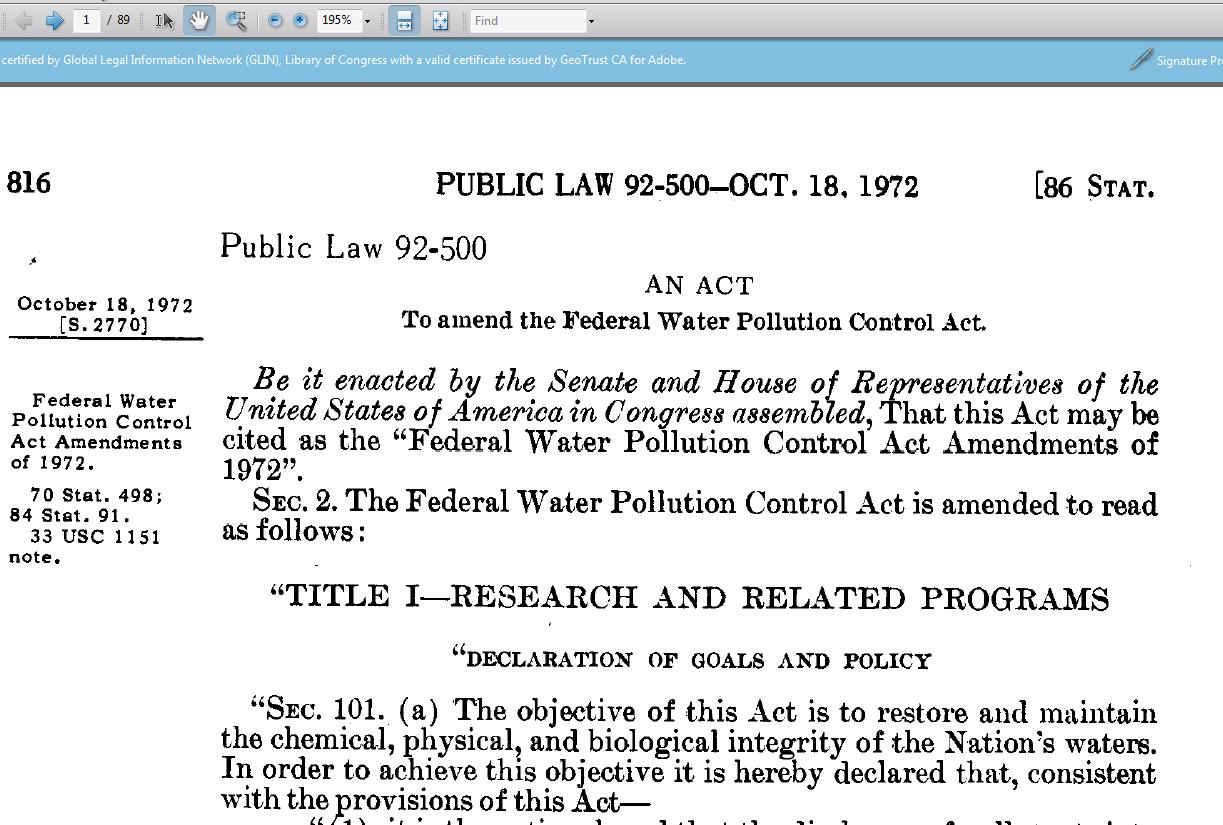
This happened in 1972, just three years later:
The Clean Water Act
http://en.wikipedia.org/wiki/Clean_Water_Act
In the US, when there was public & political will, it took only three years to go from a river on fire to the Clean Water Act. Three years.

Ironically, 1972 was also the year that plastics were first extensively studied in fish populations (link opens as PDF file). Yet 40 years later, where is the Plastic Pollution Act? It keeps getting pushed back and off the plate, as there's a need for "more science." Across the US, this very day, industry lobbyists have stymied plastic bag bans/fees. They insist that cities pay for costly scientific "lifecycle analyses," or they try to ban towns from choosing less pollution on fuzzy -- or junk -- science.

Sometimes you don't need a lifecycle analysis. You just need to look up into the trees:
Source: http://blogs.denverpost.com/thespot/files/2011/
12/plastic-bag-caught-in-tree-branches-275x183.jpg
or gutters:
Source:  http://mikesbogotablog.blogspot.com/
2011/05/bogotas-plastic-bag-problem.html
 
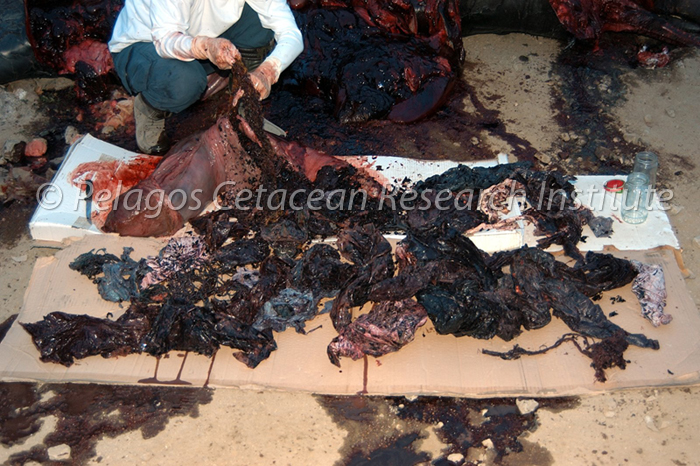
or inside the bellies of sea creatures:
100 plastic bags pulled from stomach of dead sperm whale
Source:  http://oceanwildthings.com/2012/06/
sperm-whale-death-by-100-plastic-bags/
 
Sometimes you just have to say, "This is wrong, it doesn't have to be this way, it should stop."

I enjoy the scientific approach to my beach collections. I like being able to look at the problem, learn to ask questions, make hypotheses, test those hypotheses, ask better questions.

But for me, the biggest questions were answered long ago: What is the biggest source of physical pollution in the ocean? Consumer plastic. What is the way to clean the ocean? Use much, much less plastic.

No more amount of science is going to change that. It's time to stop letting industry play the "needs more science" card. It's time to change the game.

Tuesday, June 19, 2012

Righting a Wrong in Illinois

A 12-year-old girl in Illinois saw the damage that plastic bags were doing to her environment. She asked her town to step up and put an end to plastic bags. Big Plastic noticed. They lobbied to get a bill written making it ILLEGAL for any town to ban plastic bags. Instead, the bill pushes the failed fable of plastic-bag recycling as the way forward. They're hoping to make it a model bill for all states!
Abby Goldberg, Grayslake, Illinois, USA
But it seems that Big Plastic bulled the wrong 12-year-old kid. This girl, Abby Goldberg, isn't backing down without a fight of her own. She's published a petition to convince the Governor to overturn this bit of extreme silliness.

Abby is the future. She is a very brave young champion, with a vision of a world that's less polluted instead of more. The petition drive is going viral. There were a few hundred signatures early this afternoon. Now there are close to 7,500 (Today, June 26, one week later, there are close to 150,000!!). If you agree with her stance, please take a moment to add your name to the list.

Thursday, May 5, 2011

Swimming Upstream

I hear talk that the tide is turning in the fight against plastic pollution. That laws are being passed, people are waking up, corporations are coming up with solutions. A sense of hope that scenes like this:
Ocean Park, Maine
or this:
Albatross belly, Midway Atoll, North Pacific
(site: soaronhirschi.blogspot.com/2010/11/
question-for-noaa-and-alldid-these-flip.html)
will soon be a thing of the past.

Reality check. Corporations are not poised to shun plastic. Quite the opposite. In our household, no product we've been using has turned away from plastic. In fact, we've noticed:

* Snapple, formerly bottled in glass, is now bottled in #1 PET.
* Honest Tea, formerly bottled in glass, is now bottled in #1 PET.
* Noxzema, formerly bottled in glass, is now bottled in #5 PP.
* Nivea aftershave, formerly glass, now unidentified plastic.
* Tom's of Maine toothpaste, once aluminum, now unid'ed plastic.

Among others.

The trend is global. In Europe, the plastic industry is nearing a tipping point: public acceptance of #1 plastic for beer/wine. Long a stronghold of glass, beer has begun to come in plastic in Eastern Europe. It's poised to enter the massive Western market. Elsewhere, Coke in Indonesia is ramping up its single-use #1 PET bottles in a nation that already can't handle the waste produced today.

More insidious is the trend to bioplastics. Turning food or compost into persistent, undecomposable polymers is folly. Yet self-described "green" blogs have fawned over the announcements, with only a few voices doing honest journalism and asking questions.

Couple this with high-profile failures in the Bottle-2-Bottle recycling world. In March, Coke quietly pulled the plug on its vaunted plant in Spartanburg, SC. This happened at precisely the same time that a rep from Coke was addressing the Marine Debris Conference, touting its commitment to recycling. Turns out that, surprising nobody, turning old plastic into new, food-quality plastic is extremely hard. Even "easy to recycle" #1 PET.

More and more of what we use is made of plastic. Whether that plastic is from oil, gas, compost, or sugarcane, it's still persistent, hard to refashion cleanly & cheaply, and deadly once in the environment. Millions of tons of new, virgin plastic are created each year. The old "recycled" stuff mostly becomes cheap feedstock for the stuff you see & buy at big box retailers.

Look at everything in your house that isn't yet made of plastic. Somewhere, there's an engineer in a company trying to change that. And some of every new thing made from plastic that was formerly made from paper, glass, wood, aluminum, steel, or anything else will end up in our persistently polluted oceans.

There are real successes in curbing the spread of this waste. Plastic bag bans and taxes are slowly making headway, despite the efforts of the American Chemistry Council with its dishonest "Bag the Ban" Web site and the equally misleading "Save the Plastic Bag" operation. A 9-year-old boy in Vermont is opening many eyes to the silliness of throwing away 500 million plastic straws a day. And speaking of tipping points, I'm an optimist that there will be a global tipping point against this rampant, unchecked pollution.

But for now, those of us who see the damage that our plastic world is causing have to be honest: The reach of plastics is growing, not shrinking. If we recognize and admit that, there's a better chance we can do something about it.

Wednesday, April 6, 2011

Buck: Passed

I was just surfing various ecology Web sites. And I came across a link for beach cleanups in South Africa. So I clicked. (Why not?) Here's the home page I saw:
Found at: http://www.cleanup-sa.co.za/home.htm
"Plastics don't litter - people do!" This is the marine debris prevention partnership that international plastics industries wish to create. Our products are not the problem, you are.

Let's look at that handy plastic life-cycle chart again:
Which steps involve you, the consumer?
There are at least a dozen transition steps from plastic formulation to ultimate burial/incineration. You, the consumer, are responsible for one, maybe two, of those steps. Yet the plastics industry wants to put the burden, blame, and responsibility of it all on you.

So, let's see what you've done.
  • Did you identify, clean, sort, & put out your recyclable plastics? Did the bin get blown over, scavenged, hit by a plow, poorly emptied by a recycling truck that's doing its best? Your fault.
  • Did you take your family to the park? Did your snack packages have tear-off tops? (Most likely.) Did a torn-off top blow out of your hand, or baggie, despite your good intentions? Your fault.
  • Did you try to point out that single-use plastic bags put an undue burden on our world? You may find yourself sued (Hilex Poly and others currently suing ChicoBag). And when that bag you tried not to use gets blown out of the recycling bin you put it into, it's your fault.
  • Have you ever been victim of a flood, a hurricane, worse? All that plastic material in your car, your office, your home -- it washed into the environment, and will stay there. By the millions of tons around the globe. Your fault.
The theme is clear. The plastics industry would like to shed as much responsibility and burden for the mess its products create as it can. And so far, they've done a good job of it.

But they do get one thing right: you can take responsibility. You can make a difference. As a very wise 17-year-old high schooler standing amid the plastic waste of Midway Atoll wrote last week: "There is always a choice."

Wednesday, January 5, 2011

The Recycling Myth

Today was going to be my collection report for December 29. Then something happened. Last night, I discovered this in the bag of junk I collected from Zone S:
(Added 1/6/11: The stamp on top reads "Made of 100%
recycled PETE")
And suddenly, everything I've been learning all these months came into focus. The #1 plastic (PET, or polyethylene terephthalate) I held in my hand managed to go successfully:

  • from synthesis
  • to plasticizing
  • to pelletizing
  • to shipping
  • to factory
  • to product
  • to more shipping
  • to retail warehouse
  • to more shipping
  • to retail shelf
  • to 1st consumer.

Then a fairly rare thing happened. This lucky bit of plastic was among the 28% of #1 plastic that was recycled last year. (The number comes from the Natl Assoc for PET Container Resources 2009 report found here.) Remember, the plastic industry has pushed recycling as a panacea for 20 years. And even now only 28% is recycled.

From the hand of the conscientious consumer that recycled it, it successfully went:

  • to recycling bin
  • to recycling truck
  • to recycling center
  • to sorting/cleaning process
  • to bundling/sale process

This now luckier bit of plastic was then among the 44% actually sold to U.S. reclaimers. Most "recycled" #1 plastic is dumped on developing nations, who use their own laws & methods of oversight. (From the same report, p. 3.) That makes 12% overall of #1 plastic that was both recycled and remained in the U.S.

Passing this next big hurdle, my bit of plastic went successfully from purchase:

  • to shipping
  • to factory

At the factory, only 76% of recycled #1 could be used, the rest was waste. Now we're down to 9% overall of #1 plastic recycyled, remaining in the U.S., and returned to usable flakes. These quite lucky usable flakes then went:

  • to product

What product? Fibers, sheet, strapping, resins, etc. Oh yeah, and a little bit -- 29% -- went to making new #1 containers. (Same report, p. 8.) Now we're down to 2.6% of all #1 containers sold in the U.S. actually being made into new #1 containers. Now, my extremely lucky plastic traveled successfully:

  • to more shipping
  • to retail warehouse
  • to more shipping
  • to retail itself
  • to second consumer.

At some point after this second consumer bought it, it escaped. It was lost at the beach, or blew out of a garbage can, or was tossed out a window, or got scavenged by an animal, or blew out of the recycling truck, or got swept out at the recycling center, or flew off the trash truck on the way to the incinerator. And it ended up in the ocean.

Even if this consumer had successfully recycled it, it would still have had to negotiate the path all the way back to product. What are the chances that a #1 plastic will get recycled twice into more #1 plastic? 2.6% of 2.6% = .068%.


Only 7 out of 10,000 #1 containers will get recycled -- really recycled -- more than once.

#1 plastic is held up by the plastics industry as a model. Its numbers are often cited to show the success rates of recycling.
Here is the truth: It's a downward spiral. There is no end to it, other than in the fires of an incinerator. We pat our backs when we take that old Coke bottle and put it in the recycling bin. But its fate is solely to move on, and down, until it winds up in the ocean, lays dormant for millennia under a capped landfill, or dies in a raging fire.

As it spirals downward, much of it will end up fouling the rivers, lakes, streams, ponds, shores, and oceans we hold dear. No matter our best intentions.

Just like the recycled piece I picked up on December 29. Do you think the person who recycled it the first time envisioned where it would end up?
The triangle is a lie.