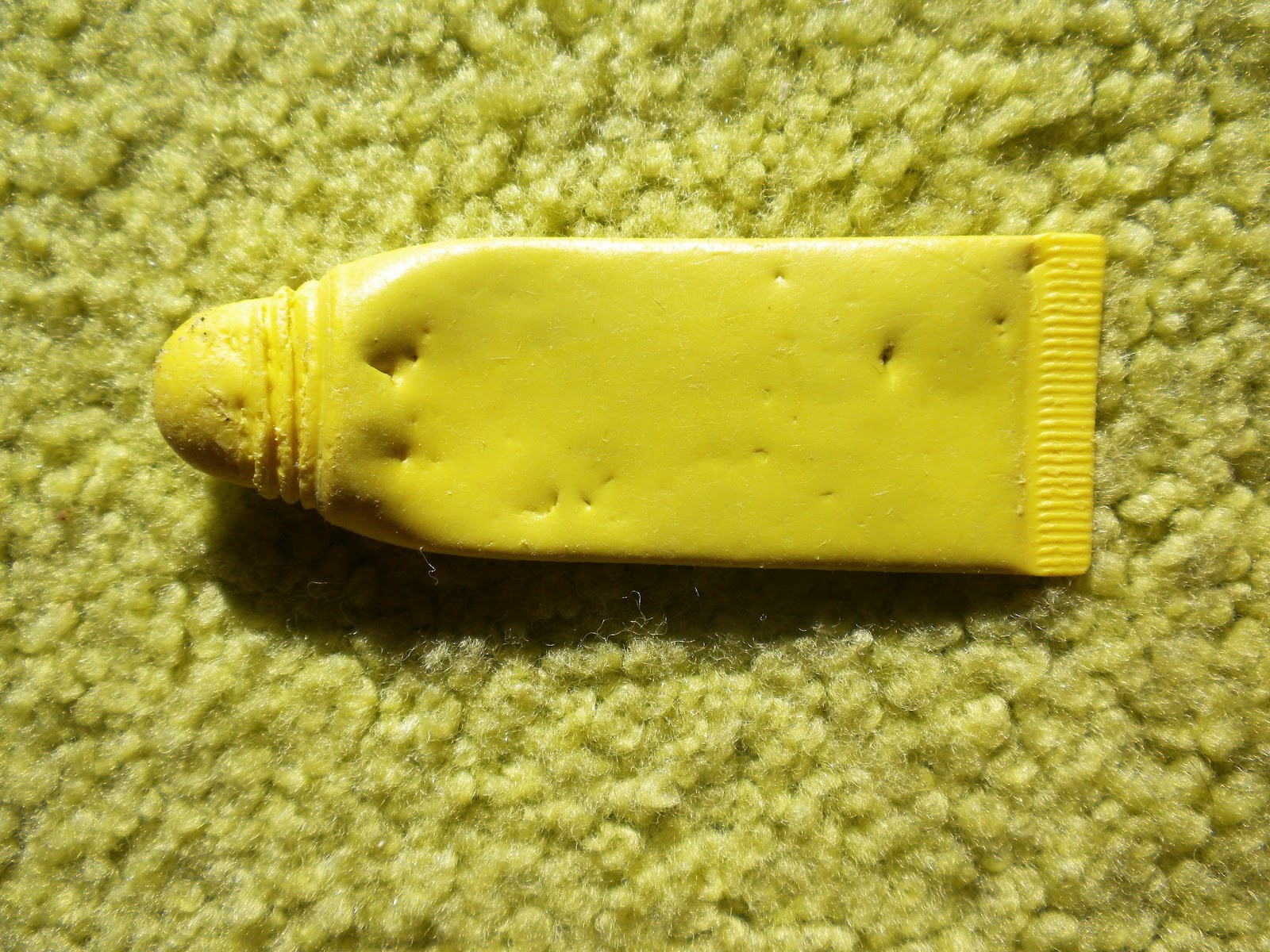
How's this for a story.
Early summer, at the height of the Roman empire, the commander of a Roman frontier fort receives word that he and his troops are being sent far away to fight a new war. The fort becomes a beehive of activity. Soldiers hurriedly pack up all their goods, repair what they can, dispose of what they can't. Tents are patched, shoes re-soled, weaponry honed.
As one of the final acts before shipping out, servants round up the commander's old paperwork and pile it in a heap in the livestock yard. They set a bonfire and then leave the fort, and their old lives, behind. A typical storm brews in the hills, dousing the bonfire before it's done its work. But by then there's nobody left to relight it.
The fort sits abandoned through the rest of the summer and into fall. Leaves blow into the buildings, squirrels hide acorn stashes amid the rush floors. But before winter hunger sends them back to collect their hoard, the next army garrison arrives, half-heartedly knocks down & covers the old fort, and starts to build its new home there.
This isn't a fantasy or a novel. This happened. The year was AD 105. The place,
Vindolanda, in what is now northern England. Thanks to thick Northumbrian clay, remains like acorns, leaves, straw carpet, leather shoe soles, oak joists & floors, iron tools, animal dung & stable flies, and thin wooden postcard-sized writing tablets survived some 1900 years to tell the tale.
 |
The hobnailed leather shoe sole of a Roman soldier that
I excavated at Vindolanda in 2005; quite a thrill! |
 |
The famous Vindolanda "birthday invitation" from the wife
of one fort's commander to another's; circa AD 100 |
These artifacts didn't reveal their secrets all by themselves. Tireless work by archaeologists, conservationists, linguists, and historians over decades has pieced the details together. Because of the care they have taken to fit everything in its place, they now have a story of real, named people and real life on the very frontier of "civilization" from an ancient time.
When I started the Flotsam Diaries,
now almost two years ago, I realized that studying flotsam was, in essence, just another form of archaeology. The physical remains of human activity. The archaeologist in me knew -- and knows -- that each thing that washes up isn't just junk. It's got a story to tell. The trick is learning how to read the story.
When, where, and how was it lost? What did it encounter while it was out there in the deep? What did its path to my shore look like? What combination of forces finally brought it out of the depths and amid the sand at my feet?
Some items offer tantalizing clues for where to start:
 |
40+ of these washed up over a few weeks in summer '11 --
suggesting a much larger dump/accident in Canadian waters |
Others tell tales of currents and gyres and the persistence of modern plastics:
 |
4 million of these escaped from Hooksett, NH's sewage plant
in March '11; to reach so far north they must have first flowed
east, caught a Gulf of Maine mini-gyre, and got tossed back |
Tens or hundreds of thousands of those disks are still unaccounted for. They're polyethylene, and float easily on the surface of seawater. They will probably be washing up on both sides of the Atlantic for years to come. The ones I find still look brand new, after 10 months in the harsh salty sea.
Other artifacts I find have spent long years in the watery grave.
 |
The aluminum lid to a steel Schlitz beer can, in a style only
used from 1973 to 1975; it finally washed up in October 2011 |
Poignantly, many speak to one of the big problems of modern plastic junk in the ocean:
 |
This Carmex tube washed up yesterday; punctures and
half-moon bitemarks on it are similar to many plastics I find |
Some ocean fish species known to ingest (not just bite, but swallow and consume) plastic:
menhaden, herring, rockling, pollock, silverside, croaker, tautog, goby, grubby, seasnail, flounder, cod, whiting, perch, bass, dolphin, wahoo, tunny, tuna, searobin, pinfish, spot, mullet. (Great write-up of the known science in a PDF file
here.)
About 2/3 of the 630 lobster claw bands that I've collected have what the
Gulf of Maine Research Institute has tentatively identified as cunner bite marks. It's not known if cunner ingest plastic, or just bite and reject. The point is, the ocean is brimming with toxic plastic garbage, and with sea creatures up and down the food chain that eat it.
All of the above to say, there's a difference between just looking at a piece of washed-in debris, and actually
seeing it. Discovering the stories it has to tell. It's impossibly sad that we've polluted our oceans so much in such a short amount of time. That every tide brings plastics and other debris in with it. But if that's the case, the least we can do is really take the time & energy to see it. And to learn from it.